Building the Motivation and Determination to Vote
You can help build a stronger democracy where all people, including those who have traditionally not voted, are motivated and determined to vote.
The Right Question Institute’s nonpartisan “Why Vote?” Tool and accompanying resources focus on having people discover for themselves the value of voting. The tool helps people see the connection between services they need — such as food assistance, income support, and child care — and decisions that elected officials make. Direct service providers, educators, community organizers, and others use the tool for voter engagement, outreach, mobilization, and education.
Let's get started: Who do you work with?
Adults and communities
You work or volunteer for a direct service provider, nonprofit organization, church group, or other organization that serves people in low-income communities.
Youth and schools
You work with young people and want to build their knowledge about voting. Young people can make a difference — even if their first election is a few years off.
The nonpartisan “Why Vote?” Tool is designed to allow people to see the connection between services they need — such as food assistance, income support, and child care — and decisions that elected officials make. Direct service providers, teachers, community organizers, and others have adapted and used the tool in creative ways for voter engagement, outreach, mobilization, and education.
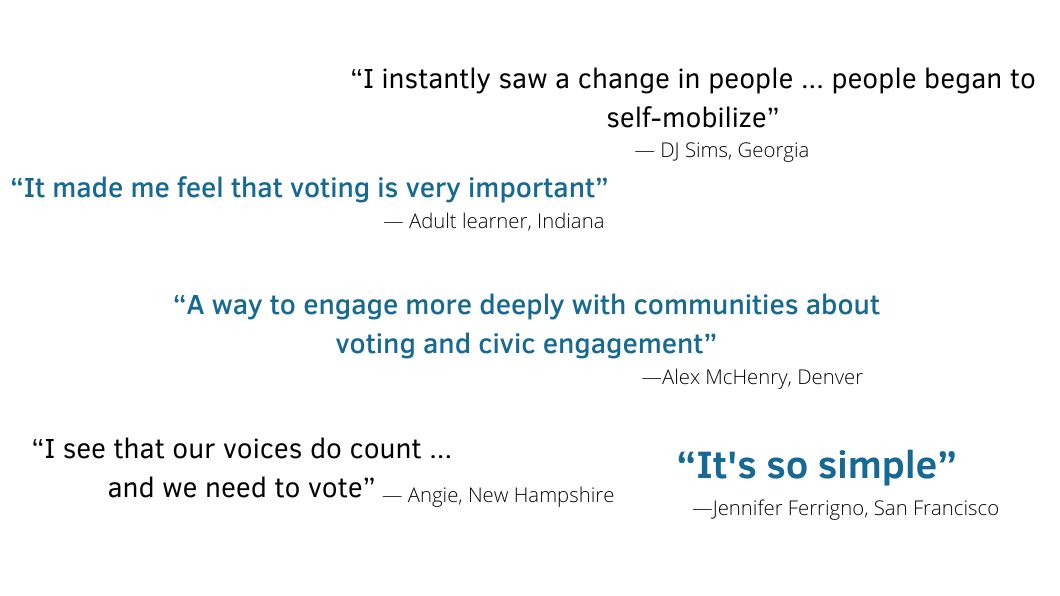
What people have said after using RQI's "Why Vote?" Tool